Ethical Work Culture- Nurture it for the Growth and Success of your Organization

Cyrus Mistry breached Tata ethics”- screams a headline in a leading newspaper. The talk with my walking companions has invariably centred around this topic not particularly about Cyrus Mistry’s ouster but more so on the ethics and work culture in India today. A close friend bemoaned that millennials lack work culture or ethics. Do they really? I wondered aloud but before I could come up with a counter argument, my friend said rather indignantly, “Earlier we used to spend our lifetime working at one office but today’s youngsters keep jumping jobs like there is no tomorrow”. Is this trend an indicator that age old tenets like honesty, integrity and dedication no longer exists? Certainly, not. However, the recent cases of scandals, frauds, and irregularities in various organizations in our country has raised the issue of ethics in workplace. 

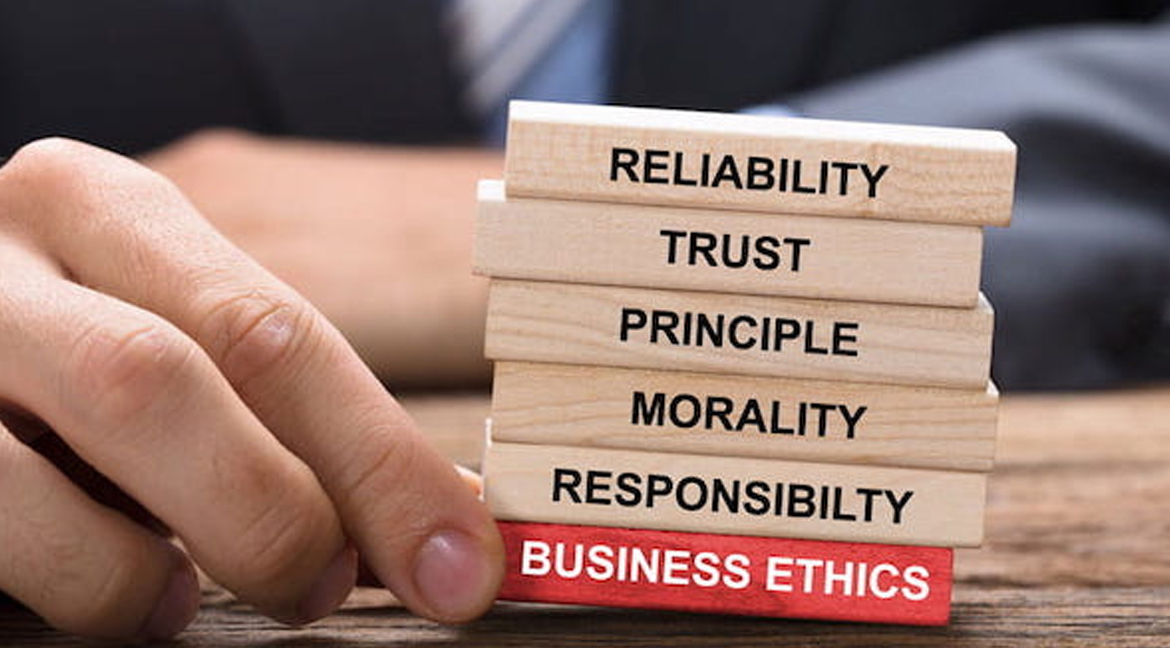
Be it a business conglomerate or a small/medium enterprise, an organization that fosters professionalism should never compromise on work ethics to achieve their goal. So, how can we cultivate an ethical work culture? Before we delve into that, let’s understand what exactly is an ethical organizational culture. It’s a place where the top management or the leader personifies integrity and encourages an open and honest communication and where employees have the freedom to speak about any wrong doings. As per the ‘Ethics in the Workplace’ survey in 2010, employees and clients are increasingly choosing ethical companies to work with and do business with.  

At the outset, let us look at some basic work ethics: 

  • Punctuality and dependability: “Our office timings are 9 a.m. to 6 p.m. but I can never reach my workplace before 9.30!”. I am sure you have heard someone in your office say this. Arriving late is no laughing matter.  A person who consistently arrives late will have different excuses for his tardiness. Being punctual is viewed by employers as being dependable. Show that you respect and honour your job by arriving on time. After all, It’s not a herculean task to achieve.  
  • Responsibility: A responsible person will invariably work hard and possess strong work ethics. An ethical work culture is all about responsible employees who work hard, stick to deadlines and is a team player. Indulging in personal work during office hours is an unethical practice that can send a wrong message to your subordinates and employer.  
  • Self-motivated & Positive Attitude: A person who is self-motivated and exhibits a positive attitude even under stressful situations is bound to create an environment of good will and set an example for others. Good work culture is all about eliminating negativity and nurturing positive attitude.  
  • Professionalism: An unethical work culture implies unprofessional behaviour and attitude. At the same time, we must not misinterpret professionalism as dressing well and looking good. A true professional is someone who is honest, learns every aspect of his job and works to the best of his abilities.  

Does every person working in your organization possess the above attributes? If the answer is yes, then I must applaud your HR team for their commendable work 

Human Resource Professionals play a significant role in formulating, advocating and guarding ethics. Their role stems from the selection and recruitment process itself which has to be honest and fair.  Ethical work culture goes much beyond the realm of HR. To understand better, read on to understand the ways to build an ethical work culture: 

  • Set a code of ethics  The principles and core values of the company can become operative if it is articulated in the written form.  Every organization should formulate a code of ethics(COE) which is basically a guideline of rules and standards for employees to follow. Though it’s the HR’s task, management should provide ample support and make sure that employees are aware of COE and comprehend it.  
  • Allow employees to report unethical behaviour  If an employee is a witness to an unethical practice or behaviour, he should be fearless in reporting the same. Organizations must provide its employees a safe and anonymous way to voice their complaints. If required, punish any violators of your ethics policy. One bad employee can ruin the image of the entire company.  
  • Role Model –If you expect your employees to behave in an ethical manner, then the leader or the top management should become an embodiment of morality.  If the leaders become the role model, employees are more likely to behave in an ethical manner. Parag Pande, Managing Director-HR sums it up succinctly, “It’s important for top management to be seen as ambassadors for strong values and ethics. This will ensure employees look up to them as role models and modify their own behaviour accordingly.” 
  • Organize Workshops/Training Programs: Setting business goals or marketing goals for the upcoming year is a common practice followed by several companies but organizations should also work towards providing training on workplace ethics. Ethics training programs or workshops should include group discussions, one to one meetings with top management, case study analysis etc. Such training programs will emphasize that your organization is very serious when it comes to adherence to ethical behaviour. 
  • Implement Work ethics assessment – Central Test, a global leader in the development of psychometric assessments recently carried out research among its clients. They discovered that 74% of HR managers believe their organisation suffers significant losses due to unethical behaviour, while 81% expressed interest in an assessment specifically designed to measure it If you want to assess the honestydependability and rule compliance attitude of a candidate, then implement work ethics assessment. It’s a scientific tool designed to identify individuals whose principles and values are in sync with your organization and it can also envisage counterproductive work behaviour. ETIX, is one such tool designed by Central Test to help companies evaluate the risks of counterproductive work behaviour and implement preventive measures. Central Test believes that ETIX can give companies and institutions the opportunity to review their practices, raise awareness of ethical responses among employees and partners, and implement appropriate management tools and training programmes. This can be used for both recruitment purposes and internal development. 

A company which strives only to achieve profits but is unscrupulous in its business dealings have minimal chances of survival. Ethical work culture is crucial to an organization’s success as it ushers in strong team work, high productivity and unswerving integrity with stakeholders. HenceNurture it for consistent growth trajectory.  

Share this:

Behavioural Skills – A stepping Stone for Success

You have already written a blog on soft skills, so why are you writing on the same topic again”? asked my nephew in a puzzled tone when I keyed in the title of this blog. “Look closely, the title says behavioural skills and not soft skills,”, I clarified. Soft skills or behavioural skills? Aren’t they one and the same, so why bother to call it by different names?”, he retorted. Soon, I realized that this misperception was shared by many of my friends and colleagues. I don’t claim to be an authority on either of the two subjects but I know for sure that people should know the difference between them. This blog is an attempt to do so and also understand the importance of behavioural skills.  

Soft skills as mentioned in my previous blog is the “abilities required in the workplace for professional success” (Georges, 1996). The abilities are essentially skills like good communication, networking abilities, compassion etc. These habits or skills have become a pre requisite in the dynamic environment that we work in todayHaving said that, it doesn’t mean that I am undermining the importance of behavioural skills. Well, that brings us back to the question of what exactly is behavioural skills? The most popular definition goes like this – Behavioural skills are the skills you use to successfully interact with others in the workplace. They are competencies employees need to be successful in a job and/or in an organization.  

behavioural skills specialist has claimed that employees need to have specific skills that enable them to face the demands of modern working life. It’s these skills which will ultimately turn an average performer into an excellent performer. Liggy Webb, founding director of The Learning Architect, a consortium for behavioural skills specialists, has identified 20 key skills that workers must have to be effective. It forms part of a wider portfolio designed to support the 21st century workforce. Based on research using the UNESCO (United Nations Educational, Scientific and Cultural Organisation) model and her work with The Learning Architect, the skills list outlines work that employers need to address in order to create a happy and successful firm. This includes: 

  • Change ability
  • Communication
  • Conflict resolution
  • Creativity 
  • Decision making
  • Empathy
  • Feedback
  • Goal setting
  • Healthy living
  • Life balance
  • Impact and influencing
  • Positive thinking
  • Problem solving
  • Relationship building
  • Relaxation 
  • Self-confidence
  • Stress management
  • Time management
  • Value and purpose

Just like soft skills, behaviour skills can be taught through a structured training programme. Dr. Miltenberger defines Behaviour Skills Training as “a procedure consisting of instruction, modellingbehavioural rehearsal, and feedback that is used to teach new behaviours or skills”. It’s a simple teaching program that can be modified as per the individual’s requirement or circumstances.  According to the aforementioned definition, the 4 step module include: 

Instruction – To imbibe a particular skill, it’s necessary to understand the meaning. Explain the skill in such a way that the trainee understands it’s significance and validation. It’s important that the trainer elucidate the circumstances under which he/she can use this skill and also clarify when not to use it.  

Modelling – Practical knowledge at times is more comprehensible than theory. This step will involve the trainer enacting or performing the skill.  

Rehearsal – Practice makes a man perfect. This old adage holds good in acquiring a behavioural skill. By practising a particular skill, the trainer will be able to identify correct/incorrect response.  

Feedback –  It’s necessary that that the trainer gives remedial feedback for incorrect response and likewise should not hesitate in showering praises for correct response.   

Real situations in professional and personal life can not only sharpen your behavioural skills but will ensure lifelong success. It’s never too late to learn a skill but do not get into the habit of procrastination! 

Share this:

Five Emerging Trends in Soft Skills Training

“I have a Masters Degree in addition to a post graduate diploma in computer application but I am unable to gain professional success”, my friend’s son bemoaned.  “These are hard skills which is probably easy to gain but do you have the requisite soft skills to make it big?”, I asked. His blank expression was an answer in itself. Soft skills can be thought of as the “abilities required in the workplace for professional success” (Georges, 1996)Good communication, networking abilities, compassion, team building and other essential personal skills and social capabilities are considered as soft skills which is necessary to complement hard skills such as education and work experience.   

To put it lucidly, soft skills is something you can start working on right now irrespective of whether you are a student, employee or a leader. Several fortune 500 companies across the globe have recognized the importance of soft skills training in achieving optimum productivity and profitability. Let’s look at 5 emerging trends in soft skills training:-  

  1. Soft skills will be valued higher than hard skills  The top management expect their teams to communicate effectively, collaborate effectually and work productively. Mere technical qualification may not help in achieving this.  According to Lisa Bodell, founder and CEO of futurethink, an internationally recognised innovation research and training company in the United States “soft skills such as listening, creativity, agility and problem-solving, are becoming as important as expertise and technical competency.” It’s the application of soft skills that distinguishes an average performer from a great performer. Today, soft skills are just as important as hard skills, if not more. In Singapore, a survey found employers are hiring candidates based on soft skills, rather than academic results. 
  2. Short and interactive session is the way to go – A week long training session is a big no-no for the millennials. If you want to motivate the Gen Y, then your soft skills training programs should be a half a day or a day long one and don’t forget to interlude it with a feedback session.  Though the young employees expect immediate results from such program, experts believe that habits can take some time to change. After all, soft skills are habits as well as skills. It’s the real situations in their professional and personal lives which will enable individuals to develop and hone soft skills. 
  3. Investing in soft skills training will yield great results  study conducted by Development Dimensions International found that for every $1,100 invested in soft skills training, employers earned an average return of $4,000.  Employee miscommunications cost businesses US $37 billion every year in the US and UK. Little wonder then that Singapore government is urging students to develop soft skills, particularly abilities to work cross culturally and in teams. For an organization’s bright future, it’s prudent to invest in soft skills training instead of merely focusing on technical skills.  In India, the realization has already set in that lack of soft skills can bring down the bottom line. In the future, we are more likely to see companies investing a substantial amount on soft skills training. 
  4. Growing need for ‘certified’ soft skill trainers– It’s not just working professionals, but school children and college students too are comprehending the importance of soft skills. There is a growing need for certified soft skill trainers who as Atkinson says have to deliver fun and action-oriented trainings.  “Millennials are the fastest growing generation in the workplace and organizations that implement an engaging training program aligned with both business and personal goals of Gen Y will receive incredibly high return on investment”, Atkinson says. 
  5. Instructor led online training will become popular– With the growing popularity of online virtual classrooms, conventional training(read classroom based) or webinars may cease to exist. The uniqueness of virtual classrooms lies in its flexibility, cost effectiveness and scalability. App based or mobile training is also a much sought after option which will top the popularity charts in the coming months.  

 To conclude, a single learning session or a training environment is not sufficient enough to absorb soft skills. Guided and repeated skill practice in real situations will help people achieve the desired results in their professional, social and personal lives.  

Share this:

Vision of Recruitment Industry in 2017

Gone are the days when human resource was associated merely with hiring talent. The role of recruitment industry in India and world-wide has seen a major impetus in terms of expanding their functionality and gaining a firm foothold in today’s dynamic business environmentThis change can be attributed to the fluctuating demographics & diversity of workforce, penetration of technology and organizations seeking more control over their employees.  These factors have definitely helped this industry in more ways than one.  

To start with, we are no longer viewed as a ‘hiring’ agency but are considered now as a ‘strategic partner’. True to this new sobriquet, a good number of home grown players have been offering comprehensive HR management solutions like providing corporate training, pay-roll processing, analytics, engagement, recruitment process outsourcing, etc. So, can we say that the future looks bright for the recruitment industry in India?  It surely does. On this note, let’s envision the trends and opportunities for the recruitment industry in 2017.  … 

  • HR technology –  As discussed in my previous post, with the help of technology, HR can be extended to the organization, allowing managers and employees to manage their own profiles and perform many other processes in a self-service format. This can help with recruitment, on boarding, training, performance reviews, and even career path strategy and succession planning. HR technology reduces workload and improves business. Cloud based hiring toolsdata analytics, biometric data, mobile computing are some of the significant trends that are impacting the HR technology space.  
  • Rising popularity of social media– It’s not just the millennials who are making the optimum use of social media tools but companies too have realized that social media is one of the best and probably the most cost effective way to attract and retain talent. To widen brand reach and visibility, companies should make their presence felt on social media platforms, niche job portals, industry specific web pages and various groups/forum. Katherine Mills, a Vancouver-based digital marketer sums it aptly, “Your online presence is your brand. Reputation management should be in every company’s repertoire.” The tech-savvy HR professionals should take maximum advantage of social media tools but should also learn to mitigate its risks. 
  • Say goodbye to obsolete methods –  In today’s times speed is the name of the game. Hiring process has to be quick, seamless with minimal paper work. Obsolete methods like endless wait for a job interview, innumerable paper work and rigid hiring processes can give an impression that the company is technologically challenged and inefficient. Thankfully, smart HR managers are making use of tools like skype, LinkedIn and google hangouts to attract/interact with candidates. The trick is if you find a good talent, then act quick and hire! Video interviews/skype calls or interview is another trend that is catching up in a big way.  
  • RPO will become a force to reckon with – Recruitment Process Outsourcing(RPO) as the term indicates is a process wherein an organization outsources all or part of their recruitment process to a third party/external service provider. Experts believe that an increasing number of organizations across varied business sectors including small organizations with an employee strength of less than 100 are likely to embrace RPO. Seen as a next generation recruitment method, RPO effectively adopts technology by ensuring talent acquisition in the most cost-effective and reliable way. 
  • FDI may upsurge BusinessIndustry experts believe that Foreign direct investment will have a positive impact on the recruitment industry. With the arrival of new talent, there will be a greater need for HR technology to effectively manage and retain workforce.  

As per a news report in The Economic Times, recruitment companies are saying that jobs in India have increased by as much as 18% year-on-year and are optimistic about further jobs growth prospects. Though this optimism can take a beating in case of sluggish economic growth, let us hope and work hard towards a brighter and promising future for the sake of the country and the workforce alike. After all the recruitment industry plays a significant role in the economic development of the country. Don’t you agree that an efficient work force = strong economy? Your comments are solicited.  

Share this:

The Changing Phase of HR in the Digital Age – A Snapshot

Caption for the Image – Using technology, HR professionals can unlock a vista of opportunities to retain talent and increase productivity 

 “Technology has become an integral part of our lives whether you like it or not”, I overheard my nephew telling his mother the other day. Yes, indeed. It’s rather foolish to run away from technology when it has become ubiquitousIt’s not just the popularity of social media or our excessive dependency on electronic gadgets, technology, if adapted smartly by business establishments can usher in growth and success.  

In the present times or should I say the digital age that we live in, HR professionals get the unique advantage in building a digital eco system that is centred around people, technology and processesBesides ensuring seamless workflow and increasing productivity, a digital eco system (if managed effectively by HR) can bring about a paradigm shift in the way we work 

To go digital, HR professionals should take the lead and should be willing to acquire new skills and adapt to changes in the organizational thinking. Some of the simple measures HR can take is listed below: 

  • Identify and understand- Does your organization have a digital status at all? Identify and understand this aspect at the outset. 
  • Knowledge sharing – This can play an important role in devising a digital strategy. Look out for people in your organization who possess strong digital skills and take their help to devise a digital strategy and ask them to share their knowledge with their colleagues.  
  • Provide resources and incentives –  HR department’s prerogative should be to educate and make the workforce understand the importance of a digital strategy. If there is a digital divide between the top management and the employees, make sure incentives and educational resources are provided to bridge the gap. 

I was recently reading a report called Building the Digital HR Organization by Accenture and SuccessFactors wherein they have reiterated the need for HR operations to change, to be more streamlined, and more agile to keep up with today’s workforce. The report further states that digital technology is shaping the future of Human Resources, and it outlines three ways that technology will disrupt how future HR departments operate. 

According to me, this report is a must read for all those who are serious and committed towards ushering in HR initiatives in the digital age. For the benefit of my readers, I have picked up few important points from this report. It gives a lucid description of how Digital technology is driving change for HR in three key ways: 

  • Enables new approaches to delivering HR services  Social media and other mobile tools are regularly used by our employees today. These tools can be effectively used to communicate about HR services and engage employees on their own terms. This is a simple but straightforward approach of using familiar technologies to reach employees in new ways. The use of multiple channels to provide HR services will ensure that it can reach employees anywhere, anytime and on any device.  
  • Talent management becomes easier With the help of technology, HR can be extended to the organization, allowing managers and employees to manage their own profiles and perform many other processes in a self-service format. This can help with recruitment, on boarding, training, performance reviews, and even career path strategy and succession planning. 
  • Allows HR to act more like marketing- Technology enables customization. The HR department can use technology to act more like a marketing department by tailoring messaging to specific groups, customizing employee options and focusing on individual or group performance measures. An individual employee performance can be focused/assessed more easily through this method thereby eliminating the one-size-fitsall approach which often turns out to be ineffective and unfair. 

The report cautions that if HR departments don’t adapt and embrace some new digital technologies, they run the risk of becoming obsolete, which could discourage some potential employees in today’s tech-savvy market. To read the full report, click here 

Share this:

7 ESSENTIAL TIPS TO MAKE YOUR WORK EXCITING AND ENRICHING

Often, I have been asked about the secret behind my success. Let me assure there is no hidden secret about the moderate accomplishments I may have achieved in the last 37 years of my professional career. However, I can certainly tell you that I have adhered to the following tips since the beginning of my professional journey and it has definitely held me in good stead.  I call it the essential tips that can make your job exciting and enriching. Needless to say, productivity will soon ensue 

  1. Doing things strategically– I always look beyond the immediate and into the future…maybe 3 or 5 years down the lane. Where do I see myself? This is an oft repeated question in my mind which I have been asking myself since the beginning of my career. This helps to prioritize my goals, plan ahead, delegate effectively and work towards implementation. Another question I asked myself when I started Layam Group in 2007 was “will our business create any difference in the lives of people?”, Today I have a definitive answer to this-‘Layam has certainly helped achieve the dreams of others- the culture of doing things strategically is an omnipresent trait of every employee and it has certainly created a differentiator in terms of the 10,000 people whom we have made employable or the number of clients who have been impacted by our tenets of cost, quality and productivity.
  2. Ideating with others-When I discuss my plans, ideas or strategies with my team, it’s with an intention to seek the other person’s perspective. Working alone or in isolation will not help me get the idea into momentum or for that matter increase my productivity or that of my team. 
  3. Empowering– One tip is to learn the fine art of delegating. Delegate your work to your juniors or team members. This is one way of empowering them. It also helps them to develop their talents or skills and become more productive  
  4. Taking lessons from success and mistakes– For me learning is a continuous process. For that matter, every moment, I try to find opportunities to learn or improve myself.  We learn from our mistakes-we have all heard about this insight and realized the true meaning behind it. But if something goes well, I delve deep and scrutinize-What were the factors that helped us in finishing this project so successfully? Can we incorporate few elements into future projects as well? The scope of improvement is the mantra 
  5. Energy Management– Time Management, work life balance, Productivity and quality of work can all be achieved if you are left with sufficient mental and physical energy. If you are tired and unable to put on your thinking cap, then you may end up doing fewer tasks for a longer duration of time.  Managing your energy levels is important to increase workplace productivity. This can be easily achieved by following a healthy lifestyle, which essentially implies eating timely and healthy meals, exercising regularly and going for short spiritual journey in terms of practicing meditation, reiki or the likes. 
  6. Cut the clutter to usher in clarity-Here, I am essentially referring to the physical clutter. Your workplace should always be well organized and clutter free. A clean workplace will give you a sense of clarity and help you to focus better. 
  7. Take buffer time to recharge– Non-stop meetings and deadlines may leave you with little or no time to think. Take ‘quality’ breaks. This will help you recharge your brain not to mention your energy levels. I seldom pack my day with client meetings or team meetings. I take some time off to deal with phone calls, messages, mails or simply do nothing at all. A 20-30 minutes break between a hectic work schedule can break the monotony and help you bounce back with renewed vigor.  

Bill Cosby had once said, “In order to succeed your desire for success should be greater than your fear for failure”. I follow this maxim to the fullest and my advice to you is to have the passion and desire to reach for the stars. You may soon realize that even in the toughest situations, you don’t tend to give up because your passion to succeed will emerge stronger eventually defeating your fear of failure!  

Share this:

3 KEY HR STRATEGIES THAT DRIVE BUSINESS PERFORMANCE

The present era for HR is to mentally digress themselves from conventional HR to business HR. According to me, HR is the sole partner of CEO to ensure organizational growth. Merely talking about motivation, culture and empowerment will not make any sense unless HR develops the right chemistry with efficiency, productivity and quality. Bottom line of the company should be Romance and making things happen should be the passion. Hence when we talk of performance the answer for today’s HR is to develop ownership instead of being too theoretical in their approach. 

According to the India Skills Report 2018, hiring outlook for 2018 looks “positive”, and is estimated to grow by 10-15 per cent this year. Good news indeed but the biggest differentiator for any company is not about hiring the right talent but their ability to engage and retain them. Recruit, engage and retain will continue to be the core function of Human Resource Management in 2018. I firmly believe that any organization that does not have a strong and effective HRM will face serious problems in managing their day-to-day activities. 

Strategic human resource management as per HR management expert John Bratton is “the process of linking the human resource function with the strategic objectives of the organization to improve performance.” Let’s look at 3 Key HR strategies that can drive the business performance of your company 

1.     Key Performance Indicators (KPI)-If your company’s performance must stay on track, you should look at a quantifiable way of measuring your success. Efficiency, productivity, quality and competitiveness are the key performance indicators of Layam Group and we evaluate the success of our company based on these indicators alone. Before our new employees get introduced to their job profile, they are told about the importance of KPIs and their effectiveness in achieving business objectives. Effective KPI’s can not only evaluate the success of an organization but also be used for a project, program, business process and functions that top management see as crucial for progress. 


2.     Learning & Development –  Nurturing talent, building the right mindset for the bottom line of the organization should be the L&D’s focus area. At Layam, our philosophy is to focus on Brain Count instead of Head Count. Through our learning and development modules, we aim to change the mindset, build passion, inculcate a sense of ownership and thereby drive the business to par excellence. In today’s times, mere on-board training is not sufficient to ensure performance or productivity. Constant reskilling is required to close the skill gaps. Individual’s goals and performance must be in sync with the company’s overall vision and goals. To achieve this, HR must work towards improving the performance of the group and individual alike. This is where learning and development comes to the forefront, which is basically a subset of HR and an important part of the organization’s talent management strategy. Learning and development can ensure that your company gets a competitive advantage. 

3.     Organizational Culture - The overall culture of the organization is largely related to your HRM strategy. The need of the hour is to establish a link between management style and business strategy whilst maintaining the employee’s well being and performance- Your HR team can devise strategies to achieve the same. For instance, attitude of the senior management can shape the organizational culture since it’s their style (autocratic, open door or proactive), beliefs and values that trickles down to the rest of the employees. Effective HR practices like creating communication channels, devising on-going training programs, flattening the organizational structure, establishing clear goals, ensuring employee participation, creating an impartial reward system are some of the ways in which organizational culture can be strengthened and sustained. 

Every company should evaluate their HR policies and modify it as per the changing times and needs. After all, implementation of key HR strategies is a vital element of business success 

Share this:
×

Please Fill the Details below will share the required document to your email.